 You have reached the point in your life where you have decided that things can’t keep going on the way they are now. Depression is ruining your career, anxiety is keeping you up all night, you can’t stop fighting with your spouse, you feel there’s no joy or meaning in life anymore, you’re angry all the time, or any other number of problems pushing you to the limits of what you can take. Once you reach the conclusion for yourself that you want to live a better life then you are ready to make the effort to change. This is a significant milestone and a good sign that things in your life are ready to start improving. The next stage is asking yourself, “But how should I change?”
This is not an easy question to answer because simply recognising that your patterns of behaviour in action or in thought are dysfunctional is only the beginning of the struggle. One needs to know what healthy behaviour looks like and one needs to stay on the path towards changing those bad habits into good habits. This is why you need a therapist. You need a therapist because your current lifestyle and values are no longer functioning sufficiently to keep going. You need a specialist in helping take your life apart piece by piece to find and examine the problems and identify possible solutions. This essay will cover several keys arguments for why you need a therapist, with an obvious emphasis on the particular strengths of what a philosophical therapist can offer you. Before going into why you need a therapist, I just want to cover a misconception that many people have: that a therapist is there to tell you what to do. Continue reading
 There is a funny meme that one can look up by going to Google Image Search and typing in “what people think therapists do”. I can tell you that I do relate to a lot of these. The “what people think” meme is one of my favourites because it concerns my one of my favourite subjects: empathy. Agree or disagree with what some people put in these memes it nonetheless challenges one to think about how differently people see the same thing. I have worked as a therapist/mentor/behaviourist for several years now and I’ve picked up that few people understand what a therapist does and why these things are important. This list of three functions of a therapist is what I consider to be the most important things that I do as a therapist. Keep in mind that other therapists would possibly disagree and that maybe their approach suits their clients. This list is ordered by the importance I place on them; here are the three things I believe therapists should do:
 Mood dependent behaviour refers to the state of mind when a person can only take action if they feel capable of it, even though they are otherwise completely capable of acting. It might be putting off doing an assignment, it might be procrastinating about preparing a healthy meal, it might be as simple as waiting until the house is empty before emerging from one’s room. It can be hard for a person to understand this if they have never felt so small and miserable before to find such ordinary daily activities so overwhelming. Ridicule or condescension are common reactions when opening up to someone about facing such struggles. Failing to find a compassionate ear results in an unwillingness to attempt to open up again in the future, adding an extra layer of loneliness and despair to the experience. When one is this powerfully affected by one’s mood, it can feel preferable to hide alone or to starve rather than to ever face the terrifying world that lies beyond the front door.
 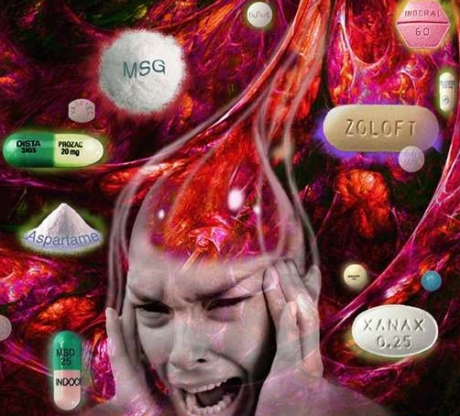 While one often comes across articulate and well-argued articles criticising anti-depressants from a medical or efficacy point of view, one seldom comes across the philosophical argument against anti-depressants. It was, in fact, the philosophical case against anti-depressants that convinced me as a teenager that I would never, ever take them for myself, a decision that has been beneficial to me ever since.
 One of the most misleading and confusing distinctions people often make with emotions is to divide them into two groups: good feelings and bad feelings. Good feelings might include joy, pride, curiosity, warmth, confidence, concern, or trust and bad feelings might include anger, fear, jealousy, guilt, despair, grief, or hate. While certainly there is wisdom in distinguishing between the pleasant emotions and the unpleasant emotions, calling the unpleasant emotions “bad” is quite incorrect. All of our emotions, and the combinations of emotions that we can experience, have some survival benefit. This point is important: if any of our emotions were hazardous to our survival, then they would not be passed onto future generations.
 Never been to therapy before? Wondering how it can help? Curious about the therapeutic process? Each year, tens of millions of people seek therapy for a variety of reasons. Not all therapists are the same, though; there are many different schools of thought. Even within the same school, each therapist is unique in their approach to the therapeutic process. Philosophical therapists were arguably the first therapists in history, but are relatively few in numbers of practitioners today compared to the mainstream schools like behaviourism, psychoanalysis, and gestalt, just to name a few. Because philosophical therapy is different to most of the other schools, I have written this article to cover the most basic process of the philosophical therapeutic process.
 When asked what the most important component of mental health is my first three answers are honesty, honesty, and honesty. More specifically, I am talking about self-honesty, honesty about other people, and honesty to other people. However, the biggest challenge in any relationship is to be completely honest with another person. The feeling of “walking on eggshells” around someone close to you is so common that it’s hard to find anyone who does not relate to being too scared to be open and honest with someone close to them. Why is honesty such a big deal? Why is honesty so hard? How can honesty improve one’s life? How can honesty improve one’s relationships?
 mon question people ask is where their problems come from. Why do they have sudden panic attacks at work? Why do they yell at their spouse when they don’t want to? Why do they lie when they mean to be honest? Why do they tell people get lost when they really want them to stay? Why do they choose to spend so much time with people who cannot help them to be happy? Why do they not have the motivation to get up in the morning to deal with their problems? The root of all these problems lies in childhood.
 Lack of motivation is a common complaint in the 21st century. Many people talk about feeling a lack of motivation. There are many factors that control how motivated a person feels: incentives, deterrents, personal interest, cognitive dissonance, past childhood traumas, and dopamine levels all rate highly. Each of these topics deserves an article in its own right, but for this topic, however, this article will concern itself merely with self-esteem and dopamine levels. Furthermore, it will act simply as an introduction to the topic of dopamine and its relationship to motivation. If you are interested in this topic, you are urged to do your own further research, as this article will not be an in-depth academic piece. There are a few links at the bottom to get you started.
 Philosophical Therapist