Continuing with the series I started a couple of days ago; another aspect of mental health that I believe to be very important is the topic of morality. Now, morality gets almost no mention whatsoever in psychology textbooks and again I’m highly suspicious of this. The suggestion here is that morality is somehow outside the purview of psychology, however, I would argue that morality, or its lack, is actually at the heart of a lot of what we call mental illness. Consider how many times you hear about criminals pleading insanity in court to justify their crimes. Psychologists are often brought in as expert witnesses to give weight to such claims. Yet, why the lack of mainstream academic discussion among psychologists about morality and it’s relationship to mental health?
The first issue is of course defining what morality is. In the simplest sense, morality is about doing the right thing based on a set of rules. There are two major competing schools of thought about what rules count as moral: one that is very popular in academic writing and trendy social circles, and the other which is considered by many to be old fashioned, out of date, and ridiculous. The popular definition is that morality is socially defined, it is a set of rules that have no objective basis to them, they are just adhered to by people because of traditional and political authority. This is subjective morality, while the supposedly out dated version of morality is called objective morality and the argument here is that morals are not mere popular whims, but come from reason and are universal.
Continue reading
 Mood dependent behaviour refers to the state of mind when a person can only take action if they feel capable of it, even though they are otherwise completely capable of acting. It might be putting off doing an assignment, it might be procrastinating about preparing a healthy meal, it might be as simple as waiting until the house is empty before emerging from one’s room. It can be hard for a person to understand this if they have never felt so small and miserable before to find such ordinary daily activities so overwhelming. Ridicule or condescension are common reactions when opening up to someone about facing such struggles. Failing to find a compassionate ear results in an unwillingness to attempt to open up again in the future, adding an extra layer of loneliness and despair to the experience. When one is this powerfully affected by one’s mood, it can feel preferable to hide alone or to starve rather than to ever face the terrifying world that lies beyond the front door.
 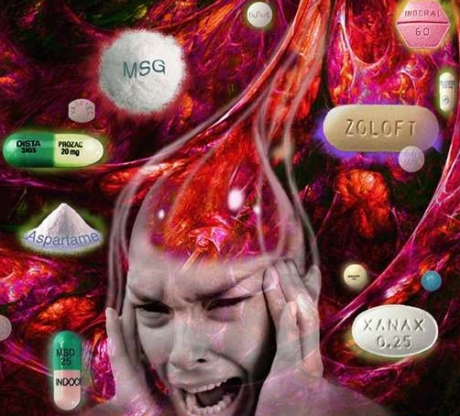 While one often comes across articulate and well-argued articles criticising anti-depressants from a medical or efficacy point of view, one seldom comes across the philosophical argument against anti-depressants. It was, in fact, the philosophical case against anti-depressants that convinced me as a teenager that I would never, ever take them for myself, a decision that has been beneficial to me ever since.
 Philosophical Therapist