 There are five traditionally accepted branches of philosophy: metaphysics, epistemology, politics, aesthetics, and ethics. Each branch answers specific questions that have a profound impact on our lives. Because each branch is focused on answering particular types of questions, it is possible for different branches to give different solutions to the same problem. Consider the branches of aesthetics and ethics. Aesthetics is concerned with the questions of what is beauty, what is ugliness, and how can beauty improve our lives, while ethics concerns the questions of what is right, what is wrong, and how can we make the best decisions. It might seem strange to some that these two branches can be confused with each other, but consider the following scenario where a person uses aesthetics, the awareness of beauty, as their approach to solving a problem.
Henry adores his daughter Beth’s smile. Nothing pleases him more than to see Beth smiling beautifully; likewise, the sight of his daughter crying fills him with revulsion. One evening, Beth comes to Henry and asks if she could have some extra dessert. Henry asks what her mother has said about this. Beth breaks down into tears and says that her mother has told her she isn’t to have any more dessert tonight unless she cleans her room. Henry recoils from the sight of his lovely daughter’s face spoiled by tears and he wishes he could gaze upon her cheeky, beautiful smile again. So he tells her that of course she may go and have some extra dessert. Beth’s face lights up with joy and Henry feels happy to see his favourite smile in the whole world again. Continue reading
 Agency is a philosophical term that refers to one’s ability to act in a given situation. When discussing the nature of free will and responsibility, it is important to be mindful of how much agency a person has. If there’s an electrical fault in your house and you’re alone, there might not be anything you can do about it. If you’re a trained electrician, there might be a great deal you could do to fix the problem. However, being knowledgeable about electronics might not be enough if your tools are at your workplace. Thus, agency depends on both having the knowledge and having the means. A person with electrical training and tools has full agency over the problem of the electrical fault, whereas a person with no training and no tools has no direct agency over their electrical problems. They will have to pay someone who does have agency in this situation to fix it. Despite sounding so simple, problems with agency account for a lot of drama in relationships. This article will discuss a healthy sense of agency and then compare it to unhealthy perceptions of agency such as hyper-agency and hypo-agency.
  Growing up I used to watch Star Trek. Both the original 1960s series and the 1980s Next Generation series feature main characters who supposedly have no emotions: Mr Spock and Mr Data. Spock considers emotions to be a weakness and actively suppresses them so as to be more logical; meanwhile Data has an apparent desire to fulfil his creator’s wish to build an android that is as human-like as possible, so Data seeks to have emotions. While as entertaining as these characters are, the series never actually explored emotions, what they are, why we have them, and what their meaning is in any depth. Rather, one gets the impression at times that the sole purpose of emotions, as far as the creators of Star Trek are concerned, is for personal amusement; they make life interesting but we don’t really need them. However, emotions are far more important than just mere novel reactions of our nervous systems to particular stimuli; they are what makes life alive beyond the organic/material level. Consider that each individual cell in your body is a living organism in its own right, additionally, the collective activity of the billions of cells that make up your entirely body is a secondary level of life, and finally the thoughts and feelings that make up what we call, for lack of a better term, “our mind” is a third tier of life built on top of the previous two tiers. But why do we have feelings at all?
  There is a funny meme that one can look up by going to Google Image Search and typing in “what people think therapists do”. I can tell you that I do relate to a lot of these. The “what people think” meme is one of my favourites because it concerns my one of my favourite subjects: empathy. Agree or disagree with what some people put in these memes it nonetheless challenges one to think about how differently people see the same thing. I have worked as a therapist/mentor/behaviourist for several years now and I’ve picked up that few people understand what a therapist does and why these things are important. This list of three functions of a therapist is what I consider to be the most important things that I do as a therapist. Keep in mind that other therapists would possibly disagree and that maybe their approach suits their clients. This list is ordered by the importance I place on them; here are the three things I believe therapists should do:
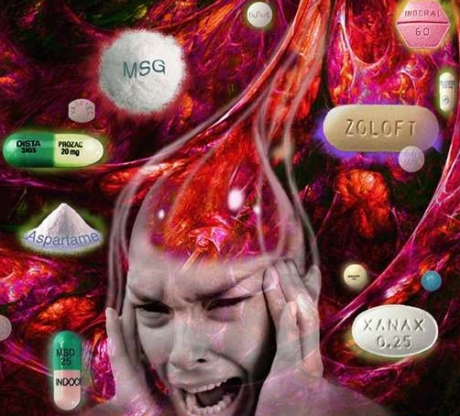 While one often comes across articulate and well-argued articles criticising anti-depressants from a medical or efficacy point of view, one seldom comes across the philosophical argument against anti-depressants. It was, in fact, the philosophical case against anti-depressants that convinced me as a teenager that I would never, ever take them for myself, a decision that has been beneficial to me ever since.
 One of the most misleading and confusing distinctions people often make with emotions is to divide them into two groups: good feelings and bad feelings. Good feelings might include joy, pride, curiosity, warmth, confidence, concern, or trust and bad feelings might include anger, fear, jealousy, guilt, despair, grief, or hate. While certainly there is wisdom in distinguishing between the pleasant emotions and the unpleasant emotions, calling the unpleasant emotions “bad” is quite incorrect. All of our emotions, and the combinations of emotions that we can experience, have some survival benefit. This point is important: if any of our emotions were hazardous to our survival, then they would not be passed onto future generations.
 Philosophical Therapist