One of the infuriating things about cracking open most authorised textbooks on psychology is that they are preoccupied with defining abnormal psychology: narcissism, sociopathy, depression, anxiety, borderline, bi-polar, dissociative personality disorder, and so on. An endless litany of things that could be wrong with someone. Curiously they don’t often, if ever, make positive claims as to what mental health is. What is a mentally healthy person? How does a mentally healthy person behave? The reasons for this are fun to speculate: maybe they don’t know, or maybe the mental health profession is full of narcissistic, autistic, and other abnormal people and so they can’t describe mental health themselves, or maybe human nature is so varied there isn’t truly a healthy condition, just lots of shades of mental grey?
So, I’m going to make sure to write about the few things which I’m confident fall in the category of mentally healthy processes and behaviours. Today, I want to write about trust, and hopefully illustrate why being able to trust is an essential component of overall mental health.
Trust is a complex subject because it isn’t only a philosophical concept, it is actually also a feeling mediated by the neurotransmitter oxytocin. Because of this trust is not a simple concept to nail down, but for this article let’s keep it simple: trustworthiness is the quality of a person/animal/thing to display consistently beneficial behaviours, and therefore “to trust” refers the capacity to bond with a trustworthy person/animal/thing. Johnathon is trustworthy when it comes to turning up to work on time, being non-violent, and moderating his alcohol consumption, but don’t leave money lying about in view because Johnathon is notorious for pinching every unattended penny he lays eyes on. Mary is trustworthy when it comes to money, but is almost never at work on time, and should not be trusted when drinking with young men. Johnathon trusts Mary with his wallet and is not disappointed, but when Mary trusts Johnathon with her purse, she’s a few dollars less wealthy than before.
Continue reading
 Agency is a philosophical term that refers to one’s ability to act in a given situation. When discussing the nature of free will and responsibility, it is important to be mindful of how much agency a person has. If there’s an electrical fault in your house and you’re alone, there might not be anything you can do about it. If you’re a trained electrician, there might be a great deal you could do to fix the problem. However, being knowledgeable about electronics might not be enough if your tools are at your workplace. Thus, agency depends on both having the knowledge and having the means. A person with electrical training and tools has full agency over the problem of the electrical fault, whereas a person with no training and no tools has no direct agency over their electrical problems. They will have to pay someone who does have agency in this situation to fix it. Despite sounding so simple, problems with agency account for a lot of drama in relationships. This article will discuss a healthy sense of agency and then compare it to unhealthy perceptions of agency such as hyper-agency and hypo-agency.
  Mood dependent behaviour refers to the state of mind when a person can only take action if they feel capable of it, even though they are otherwise completely capable of acting. It might be putting off doing an assignment, it might be procrastinating about preparing a healthy meal, it might be as simple as waiting until the house is empty before emerging from one’s room. It can be hard for a person to understand this if they have never felt so small and miserable before to find such ordinary daily activities so overwhelming. Ridicule or condescension are common reactions when opening up to someone about facing such struggles. Failing to find a compassionate ear results in an unwillingness to attempt to open up again in the future, adding an extra layer of loneliness and despair to the experience. When one is this powerfully affected by one’s mood, it can feel preferable to hide alone or to starve rather than to ever face the terrifying world that lies beyond the front door.
 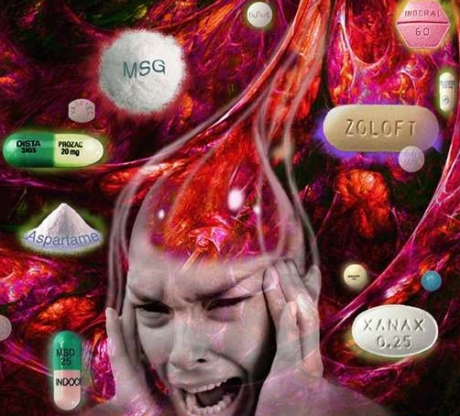 While one often comes across articulate and well-argued articles criticising anti-depressants from a medical or efficacy point of view, one seldom comes across the philosophical argument against anti-depressants. It was, in fact, the philosophical case against anti-depressants that convinced me as a teenager that I would never, ever take them for myself, a decision that has been beneficial to me ever since.
 Philosophical Therapist